How Durable Are Decks on Skids and What Makes Them Last?
A deck that can move sounds like it should be less sturdy than one anchored in concrete. In reality, a well-built deck on skids can be surprisingly durable. The key is that it has to be designed more like a portable shed than a traditional backyard deck.
That means the base does more than hold the frame off the ground. It spreads weight, resists twisting, and gives the whole structure a stable platform when it is lifted, pulled, or repositioned. When builders get the materials and construction details right, a skid-mounted deck can handle regular use, seasonal movement, and even relocation without falling apart.
The details matter. Skid size, lumber quality, fastening methods, joist layout, bracing, drainage, and maintenance all affect how long the deck lasts.

Decks on skids are built to move without losing their shape
A standard deck usually relies on posts, footings, and permanent anchors. A deck on skids relies on a rigid base. That shift changes how the structure handles stress.
Skids act like long runners under the deck. They support the frame and help distribute weight across the ground. If the deck needs to move, the skids give equipment or a tow strap something solid to work with. They also reduce the chance that one corner will dig in, twist, or drag.
This is why skid-mounted decks borrow many ideas from portable sheds. A portable shed must stay square when it is loaded, moved, and set back down. The same principle applies to a portable deck. If the base flexes too much, the deck boards can loosen, fasteners can work free, and railings can shift out of alignment.
A durable skid deck usually has several traits:
A solid skid foundation
The runners need enough size and strength to carry the deck, furniture, people, and movement stress.
A stiff frame
Rim joists, floor joists, blocking, and bracing keep the structure from racking side to side.
Even support
The weight should transfer through the frame into the skids without overloaded weak spots.
Clear moisture control
Wood lasts longer when water can drain and air can move under the structure.
The strongest designs treat the skid base and deck frame as one system. If the skids are strong but the framing is light, the deck can still flex. If the frame is strong but the skids are too small, the whole structure may sag or drag poorly. Durability comes from balance.
Deck size also matters. A small platform deck can be simple and stiff. A larger deck needs more runners, thicker framing, closer joist spacing, and better cross-bracing. The longer the span, the more carefully the load path needs to be planned.
Materials play a major role in long-term durability
The material choices for a deck on skids affect both daily strength and long-term resistance to rot, rust, and wear. Since the structure sits close to the ground and may be moved, it faces conditions that a high, fixed deck may not.
Pressure-treated lumber is common for the base
Pressure-treated wood is often used for skids and framing because it resists decay better than untreated lumber. The skids are the parts most exposed to ground moisture, splashback, and abrasion, so they need to be chosen carefully.
For many builds, larger pressure-treated timbers make better skids than smaller boards because they offer more bearing surface and more stiffness. Bigger skids also help the deck slide or lift more predictably during relocation.
Ground-contact-rated lumber is the safer choice for parts that sit close to soil, gravel, or grass. Not all treated wood carries the same rating. Lumber meant for above-ground use may not hold up as well when it stays damp.
Deck boards need to handle weather and movement
The surface boards also affect durability. Common choices include pressure-treated decking, cedar, composite boards, and other weather-resistant materials.
Each option has tradeoffs.
Material | Strengths | Watch points |
Pressure-treated wood | Affordable, widely available, strong for structural use | Needs sealing or staining to slow checking, warping, and moisture damage |
Cedar | Naturally decay resistant, lighter weight, attractive grain | Softer than many treated products and may need more care in wet areas |
Composite decking | Resists rot and insect damage, low regular maintenance | Heavier than wood and needs proper spacing and framing support |
Hardwood decking | Dense, hard wearing, long lasting when detailed well | Often heavier and may require specialty fasteners |
A portable deck should not be made too heavy without a plan for moving it. Composite or dense hardwood can last a long time, but the added weight changes how the skids and frame need to be built. A deck that is too heavy for its base may be difficult to relocate without stress damage.
Fasteners should match the environment
Fasteners are easy to overlook, but they often decide whether a deck stays tight over time. Outdoor structures need corrosion-resistant screws, bolts, nails, and connectors. Hot-dip galvanized or stainless steel fasteners are common choices, depending on the lumber treatment, climate, and budget.
Movement puts extra strain on fasteners. A deck on skids may be lifted at one end, pulled across a yard, or set on slightly uneven ground. Screws and bolts generally hold better than smooth nails in areas that see vibration and shifting. Structural screws, carriage bolts, joist hangers, and metal connectors can all add strength when used in the right places.
The goal is simple: the frame should move as one unit. Weak fasteners allow small movements that grow over time.

Construction details make the deck stable during movement
A deck on skids does not fail only from weight. It often fails from twisting. One corner lifts, another stays down, and the frame tries to rack out of square. Good construction reduces that risk.
The frame should resist racking
Racking happens when a rectangular frame shifts into a parallelogram shape. Even slight racking can create problems. Deck boards may gap unevenly. Rail posts may loosen. Stairs may stop sitting flat. Fasteners may start to squeak or back out.
Builders fight racking with:
Tight rim joist connections
Joist blocking between framing members
Diagonal bracing where needed
Properly installed metal connectors
Decking fastened in a pattern that helps tie the surface together
Blocking is especially useful. Short blocks between joists help keep them upright and reduce sideways movement. On a portable deck, blocking can also help distribute stress when the deck is pulled or lifted.
Diagonal bracing can add even more stiffness. A diagonal member across the underside of the frame helps stop the deck from shifting out of square. This is similar to the way a gate uses a diagonal brace to stay aligned.
Skid placement should match the load
Skids need to be placed where they support the structure evenly. If they sit too far apart, joists may span too much and feel bouncy. If they do not run in the right direction, moving the deck may put stress where the frame is weakest.
For a small deck, two skids may be enough. Larger decks may need three or more. Wider structures often benefit from a center skid to prevent sagging. The right layout depends on size, lumber dimensions, live load, and how the deck will be moved.
A good skid layout also leaves room for forks, lifting straps, or rollers if the deck will be relocated. Dragging a deck from the wrong points can twist it. Pulling from reinforced skid ends or designated lift points reduces the strain.
The base should sit on prepared ground
Even the strongest skid deck can suffer if it sits in mud or on uneven soil. A level, well-drained base reduces stress and moisture exposure.
Crushed stone or compacted gravel often works well because it supports the skids while allowing water to drain. Concrete blocks or pads can also help, as long as they create even support. The problem comes when only a few points carry the load. That can create sagging, bounce, or uneven pressure on the frame.
A portable deck does not need to be treated casually just because it can move. Setting it down carefully is one of the best ways to protect it.
Regular maintenance helps a skid deck last longer
Durability is not just about the build day. A deck on skids needs routine care because it sits close to moisture, insects, soil, lawn debris, and shifting ground.
The good news is that maintenance is straightforward. A few checks each season can catch small problems before they become structural repairs.
Keep water away from the structure
Moisture is the main threat to most wood decks. Skid-mounted decks face extra exposure because the base is low to the ground. Leaves, grass clippings, and soil can trap water against the skids.
Good habits include:
Clear leaves and debris from around and under the deck
Keep soil from piling against wood
Maintain airflow beneath the structure
Relevel the deck if one side settles into wet ground
Refresh stain or sealer as needed for the decking material
Pay special attention to skid ends. End grain absorbs moisture quickly. Sealing cut ends can help slow water uptake and reduce checking.
Inspect fasteners and connections
Movement can loosen connections over time. Before and after relocating the deck, inspect the frame, skids, railing posts, and stairs.
Look for:
Screws or bolts that have backed out
Rusting connectors
Split wood around fasteners
Gaps between framing members
Deck boards that feel loose underfoot
Tighten or replace hardware before the problem spreads. If corrosion appears, choose replacement fasteners rated for exterior use and compatible with the lumber.
Watch for sagging, bounce, and twist
A durable deck should feel solid. If it starts to bounce more than it used to, the joists may need support, blocking, or repair. If one corner sits low, the ground may have settled. If deck boards begin to gap strangely, the frame may be racking.
Small alignment issues are easier to fix early. Releveling the base, adding blocking, or replacing a damaged skid can extend the life of the structure.

Portable decks have clear benefits, but they need the right expectations
A deck on skids can be a smart choice when flexibility matters. It can work beside a shed, cabin, tiny home, trailer, pool area, or temporary outdoor setup. It can also help when a permanent foundation is not practical.
The main benefits include:
Relocation
The deck can be moved if the layout changes or the structure it serves is relocated.
Simpler site work
Many skid decks need less ground disturbance than a permanent deck with deep footings.
Adaptability
The deck can be reset, reoriented, or reused in a new spot.
Access
A low skid deck can often be built with access to the underside for inspection and repairs.
Still, portable does not mean indestructible. A skid deck should be moved carefully, set on good ground, and sized for its purpose. Railings, stairs, and attachments need extra thought because they can catch, twist, or loosen during transport.
There may also be local code or permit rules for decks, platforms, stairs, and railings. Requirements vary by area, size, height, and use. A portable design may reduce foundation work, but it does not automatically avoid safety rules.
For heavier use, taller platforms, or decks that support hot tubs or large gatherings, a permanent engineered design may be the better path. Skids are best suited to low platforms and moderate loads where movement and flexibility are part of the plan.
A strong portable deck starts with honest limits. Build for the loads it will carry, the weather it will face, and the way it will be moved.
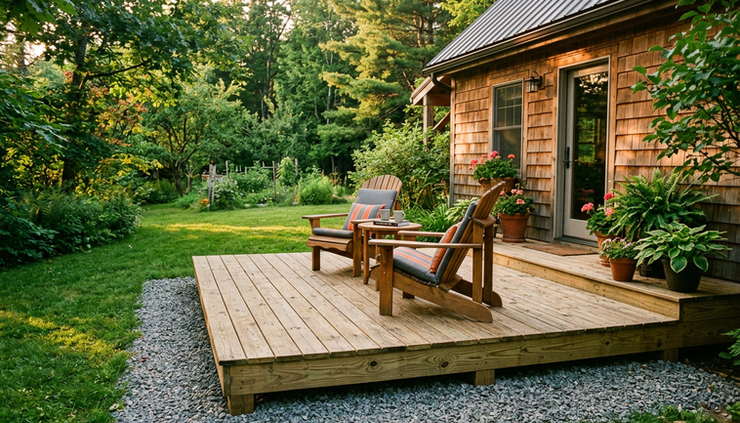
The best skid decks are durable because every part works together
Decks on skids can last for years when they are built with the same care as other outdoor structures. Their durability comes from a strong base, weather-resistant materials, tight connections, good bracing, and a dry, level place to sit.
The most reliable builds share a few simple traits. The skids are large enough for the load. The frame stays square under stress. The fasteners resist corrosion. The deck surface sheds water. The underside stays clean and ventilated. When the deck moves, it moves from reinforced points instead of being dragged carelessly from a weak corner.
Maintenance closes the loop. Keep the base clear, inspect the hardware, protect exposed wood, and correct settling before it strains the frame.
A deck on skids is not just a shortcut version of a permanent deck. Built well, it is its own practical structure, strong enough for everyday use and flexible enough to change with the space around it.


Comments